


Choosing the correct downpipe size is one of the most crucial yet often overlooked decisions in a rainwater drainage system. Whether you’re upgrading a domestic guttering system, specifying components for a multi-storey building, or planning commercial drainage, the diameter of the downpipe you select will directly affect water flow, roof protection, and long-term performance. The right size means reliable drainage during heavy rain; the wrong size increases the risk of overflowing gutters, damp issues, and costly structural damage.
This guide breaks down everything you need to know, including why downpipe sizing matters, how to calculate the required flow capacity based on roof area, common downpipe diameters in the UK, how to match gutter size to downpipe size, when to choose round vs. square profiles, and practical considerations for larger or multi-storey buildings.
Why Downpipe Sizing Matters
Downpipes are the final stage of the rainwater system. They carry all collected water from the guttering down to the drainage system or soakaway. If they’re undersized, water simply cannot move quickly enough, leading to backups, gutter overflow, increased load on brackets, and frequent leaks.
Correct downpipe sizing matters because it:
- Ensures effective water flow during heavy rainfall
- Reduces the risk of water pooling around foundations
- Prevents gutters from sagging or pulling away
- Helps protect fascias, soffits, and walls from water damage
- Improves the long-term durability of the full rainwater system
So, how much difference does a downpipe make? Quite a lot. Even a small increase in pipe diameter can drastically improve capacity. For example, switching from a 63mm pipe to a 76mm pipe can increase the flow allowance by more than 40%, providing your system with significantly more resilience during extreme weather conditions.
How to Calculate Flow Rate Based on Roof Size
To choose the right downpipe size, you first need to calculate the amount of water your roof will collect. The UK has varied rainfall levels, but Building Regulations generally require systems to cope with approximately 75–100mm of rainfall per hour, depending on region and roof pitch.
Step 1: Calculate Effective Roof Area
This is not simply the flat footprint of the building. Roof pitch affects the amount of water that is captured.
The formula:
Effective Roof Area (A) = Roof Plan Area × Pitch Factor
Typical pitch factors:
- 0° to 10° pitch > 1.0
- 11° to 30° pitch > 1.1
- 31° to 45° pitch > 1.25
- Above 45° > 1.5
Example: A 50m² roof at a 35° pitch > 50 × 1.25 = 62.5m² effective area
This area determines the required capacity of the gutter and downpipe.
Step 2: Use Flow Rate Calculations
A flow rate general rule:
- 1mm of rainfall over 1m² produces 1 litre of water.
So if your roof needs to handle 75mm per hour: 62.5m² × 75 litres = 4,687.5 litres of water per hour
This is 78 litres per minute, which must be safely carried across gutters and downpipes.
Step 3: Divide Across Downpipes
“How many downpipes do I need in the UK?” depends on:
- Building layout
- Gutter length
- Number of corners or junctions
- Roof drainage division
A key rule used by installers:
One downpipe is required for every 8–12 metres of gutter run, depending on gutter capacity. If the roof is large or complex, multiple downpipes will be essential to split the load. For commercial roofs, this number increases significantly.
Common Downpipe Sizes in the UK
Downpipe sizing varies by manufacturer; however, standard diameters are widely used in both domestic and commercial installations.
Popular Downpipes by Size
63mm Downpipes
- Typically used for small domestic roofs, sheds, garages, and garden buildings.
- Suitable when gutters are 112mm or smaller.
- Ideal for areas with low rainfall demand and short gutter runs.
76mm Downpipes
- The most common domestic downpipe size.
- Works for the majority of semi-detached and detached homes.
- Supports medium-sized roof areas.
- Often paired with 112mm, 115mm and 120mm gutters.
100mm Downpipes
- Designed for large homes, multi-storey buildings, and small commercial properties.
- Handles significantly higher water volumes.
- Often required where the roof pitch is steep or the rainfall intensity is high.
- Commonly matched with 150mm+ gutter systems.
Larger Industrial Sizes (125mm–150mm+)
- Used in warehouses, factories, schools, and large commercial buildings.
- Essential when dealing with high rainfall drainage loads or expansive roof areas.
If you’re unsure what size a standard gutter downpipe is in the UK: 76mm round is the most common standard domestic downpipe size, though square options also exist.
Popular Downpipes by Shape
Square & Rectangular Downpipes
75 x 75mm downpipes – perfect for smaller-scale projects or residential use.
100 x 100mm downpipes – ideal for larger buildings or areas with higher rainfall.
100 x 75mm downpipes – a versatile option for spaces where rectangular profiles suit the aesthetics or existing gutter systems.
Popular Downpipes by Material
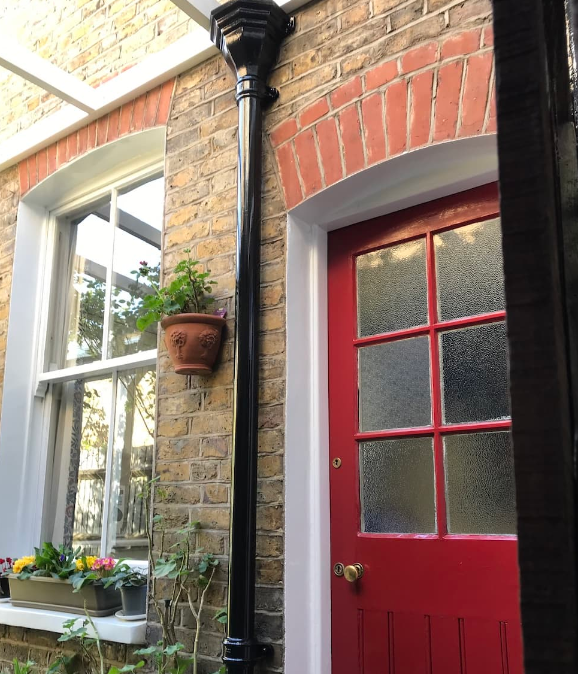
Cast iron downpipes are known for their durability and classic appearance. Sizes are usually referenced in imperial measurements: 2", 2½", 3", 4", and 5". Square and rectangular options are also available, such as:
3" x 3"
4" x 4"
5" x 4"
6" x 4"
Cast iron pipes are often chosen for heritage properties or applications where longevity and strength are priorities.
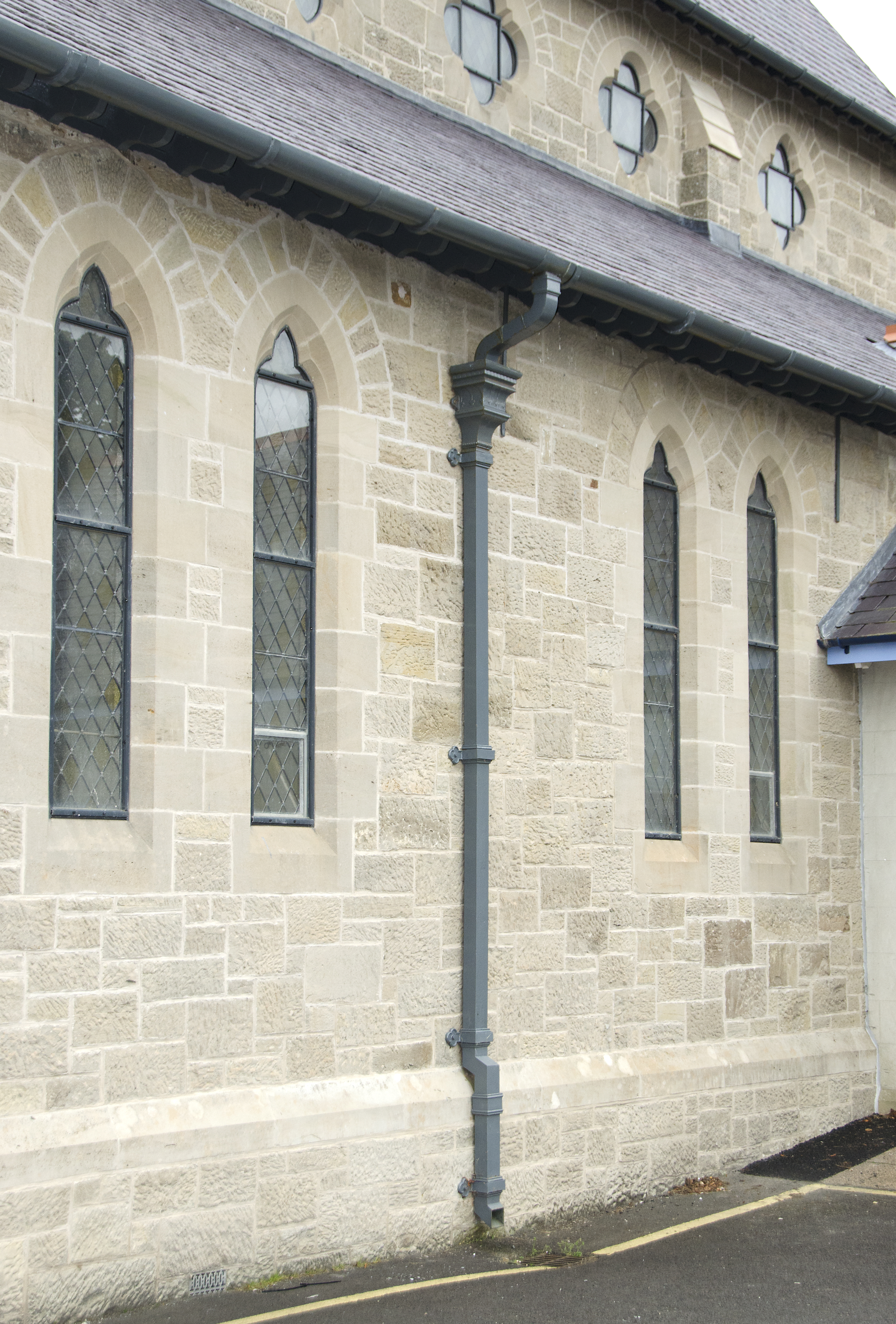
Plastic downpipes are lightweight, easy to install, and resistant to corrosion. Common options include:
- Round: 68mm, 82mm, and 110mm
- Square: 65 x 65mm
Important note: Mixing different materials (e.g., plastic and cast iron) can be challenging due to differing connection standards, expansion rates, and joint methods. Proper adapters or conversion fittings are essential to ensure a watertight system.
Aluminium offers a modern, lightweight alternative with a variety of styles:
- Cast socketed – traditional style with a socket for secure joining.
- Flushjoint – sleek design for contemporary projects.
- Swaged – tapered ends for easy connection to smaller pipes.
- Security downpipes – designed to resist tampering or damage, ideal for public or exposed areas.
Aluminium combines versatility with a long-lasting, low-maintenance finish, making it suitable for both commercial and residential buildings.
Available aluminium downpipe sizes include: 63mm, 76mm, 83mm, 101mm, 108mm and 150mm.
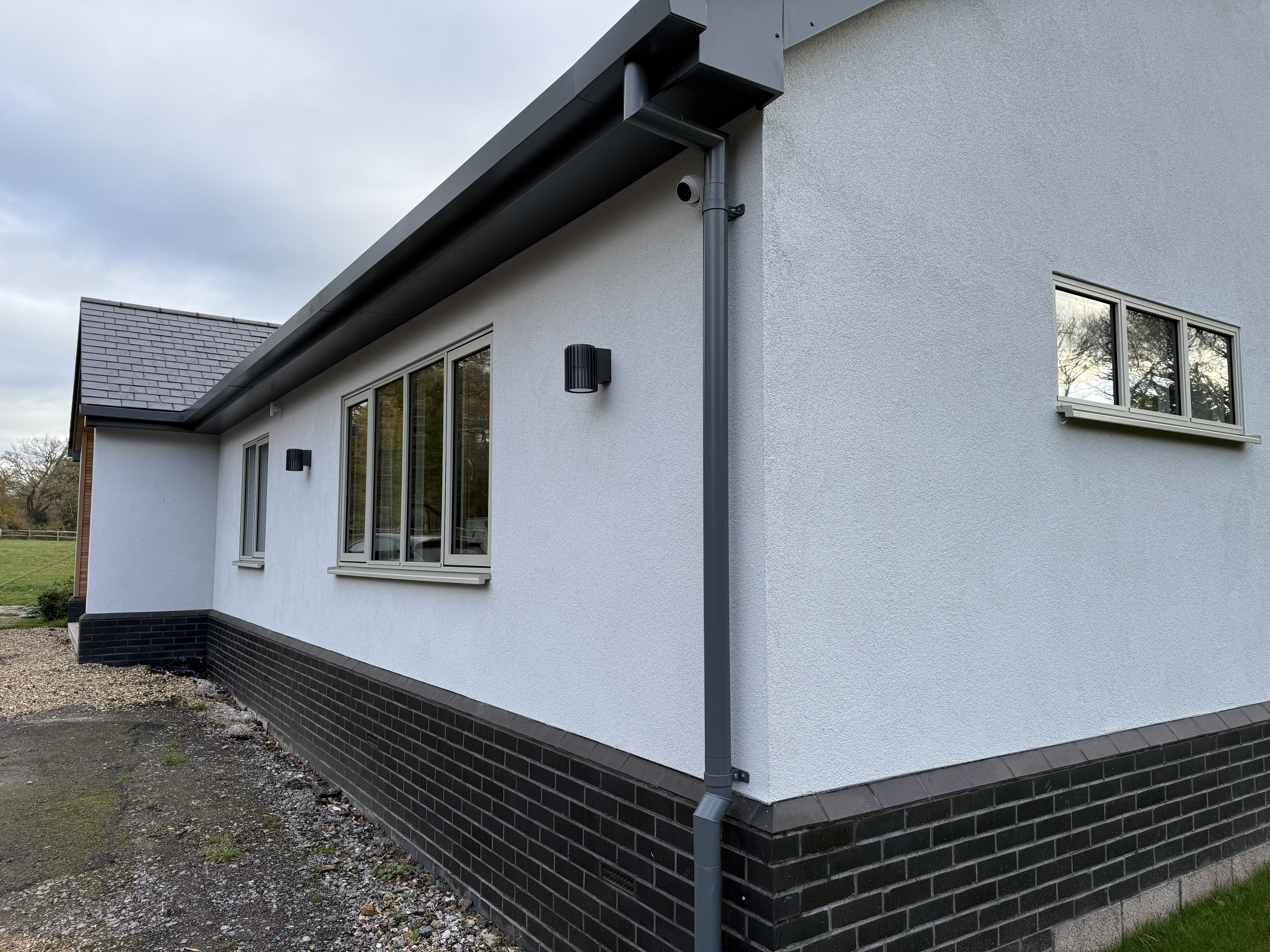
Steel downpipes are strong, durable, and ideal for both modern and traditional buildings. Available in 75mm, 87mm, and 100mm diameters, they provide excellent resistance to impact and weather, making them a reliable choice for long-lasting drainage systems.
Steel downpipes are perfect when you need a robust solution that combines strength with a sleek, professional finish.
Hoppers: Sizes, Styles & Why They Matter
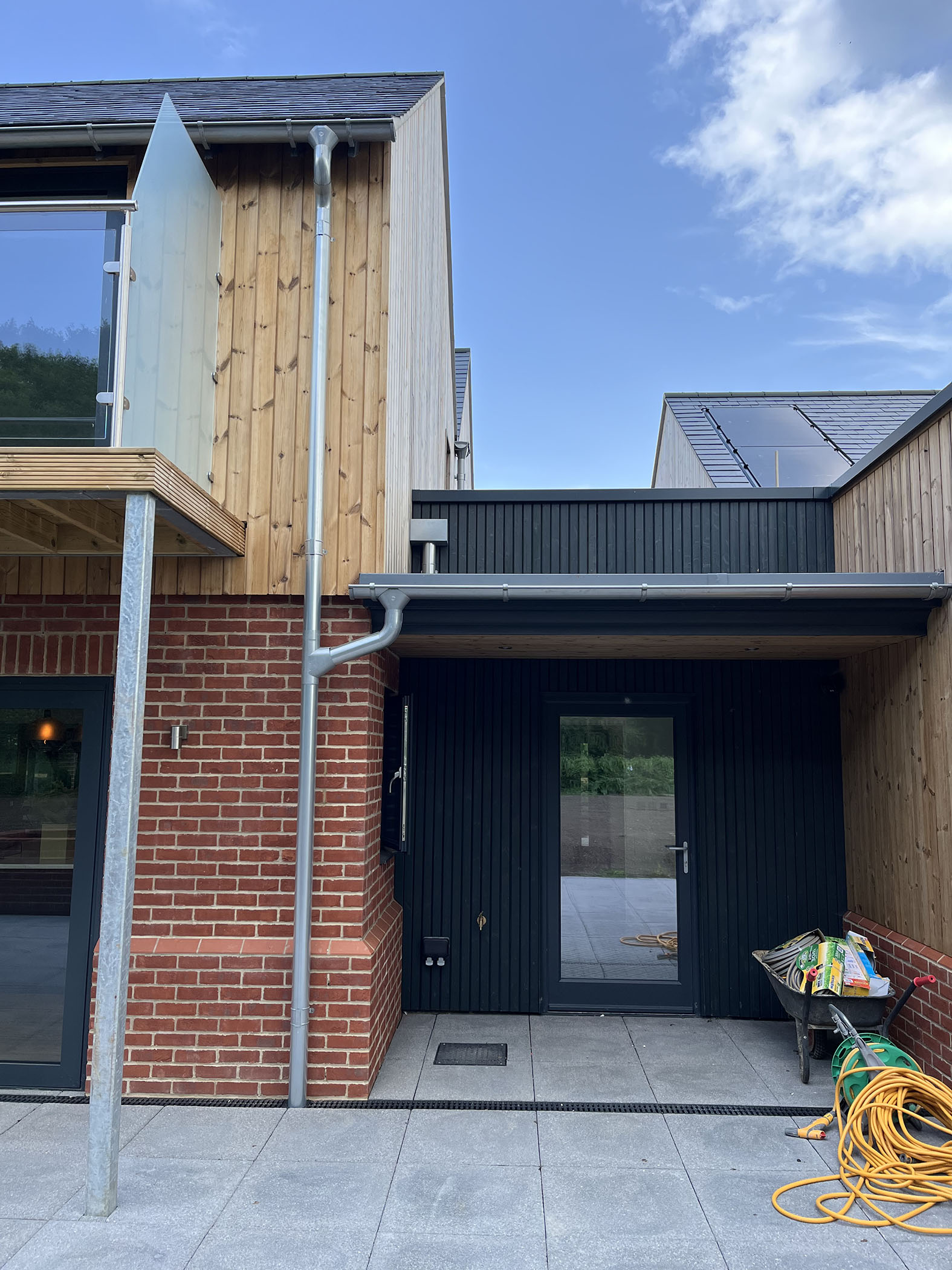
Hoppers are an essential component in many rainwater drainage systems, sitting between the gutter and the downpipe to manage water flow. They not only help direct water efficiently into the downpipe but also add capacity at critical points, such as roof valleys, long gutter runs, or areas prone to heavy rainfall. At Gutter Centre, we offer an array of hoppers, including:
Common Hopper Sizes and Styles:
Standard Hoppers: Typically paired with domestic downpipes (63mm–100mm), these hoppers handle average flow from typical roof areas.
Large Capacity Hoppers: Designed for commercial or multi-storey buildings, these oversized hoppers can feed multiple downpipes or manage very high volumes of water.
Decorative Hoppers: Available in cast iron, aluminium, or plastic, these hoppers combine function with aesthetics, adding a classic or modern touch to the property.
Square vs. Round Hoppers: The shape usually matches the downpipe profile, with square hoppers for square downpipes and round hoppers for round downpipes. However, conversion fittings are available if the styles differ.
Why Hopper Choice Matters
- Prevents overflow during heavy rainfall by acting as a buffer between the gutter and downpipe.
- Reduces pressure on individual downpipes, helping prevent blockages or surges.
- Ensures consistent water flow, particularly on larger roofs or complex gutter layouts.
- Enhances overall system longevity by directing water efficiently into the drainage network.
By selecting the right hopper size and style for your downpipe system, you ensure smoother water flow, improved capacity, and reduced risk of overflow or water damage, making them a small component with a big impact.
Matching Gutter Size to Downpipe Diameter
A downpipe must be appropriately sized to handle the flow that the gutter delivers. A mismatch is a common cause of overflow, even when the gutter appears to be large enough.
General Matching Rules
112mm half-round gutter > 68–76mm downpipe
115–120mm deep flow gutter > 76–80mm downpipe
150mm commercial gutter > 100mm+ downpipe
A simple tip: Downpipes should never restrict the gutter's capacity. The pipe must always be able to carry at least as much water as the gutter can collect.
Also consider the number of outlets. Adding an extra downpipe can sometimes be more effective than increasing the pipe size, especially on long rooflines.
Round vs Square Downpipes: What’s the Difference?
Downpipes are available in both round and square profiles. The best choice depends on aesthetics, flow performance and compatibility with your gutter system.
Round Downpipes
Most common domestic option
Efficient internal flow with minimal turbulence
Compatible with the majority of gutter profiles
Ideal for properties with traditional styling or curved gutter designs
Round downpipes often provide better hydraulic performance, as water flows more smoothly through a circular bore.
Square Downpipes
Offer a modern, angular appearance
Works well with square or ogee gutters
Tend to sit flush against walls, which some homeowners prefer
Slightly reduced flow efficiency compared to round pipes of the same nominal size
Overall, if you require the maximum water capacity, round pipes are generally the better option. If design aesthetics matter more, square downpipes can enhance the visual profile of the property without reducing performance to problematic levels, especially when sized correctly.
Tips for Multi-Storey or Commercial Drainage
Larger buildings demand more robust drainage strategies. Multi-storey homes and commercial premises face challenges such as increased water pressure, higher drop velocities, and larger roof catchment areas.
1. Use Larger Diameter Downpipes
For taller buildings, the water velocity increases as it falls. A larger downpipe helps prevent surging, airlocks or back-pressure at the base.
2. Increase the Number of Downpipes
Commercial roofs often require:
- Multiple outlets per elevation
- Separate drainage zones
- Larger diameter gutters paired with 100–150mm downpipes
This prevents bottlenecks and distributes water evenly.
3. Add Expansion Joints Where Needed
Multi-storey pipe runs expand and contract more dramatically due to temperature changes. Proper expansion joints prevent cracking or separation in uPVC systems.
4. Consider Box Gutters and High-Capacity Profiles
Commercial buildings often benefit from:
- Deep flow gutters
- Box gutter systems
- Custom-engineered outlets
Pair these with 100mm or larger downpipes for optimal performance.
5. Assess Local Rainfall Intensity
Some UK regions, such as the North West and Wales, experience significantly higher rainfall. In these areas, commercial installations often exceed the minimum standard.
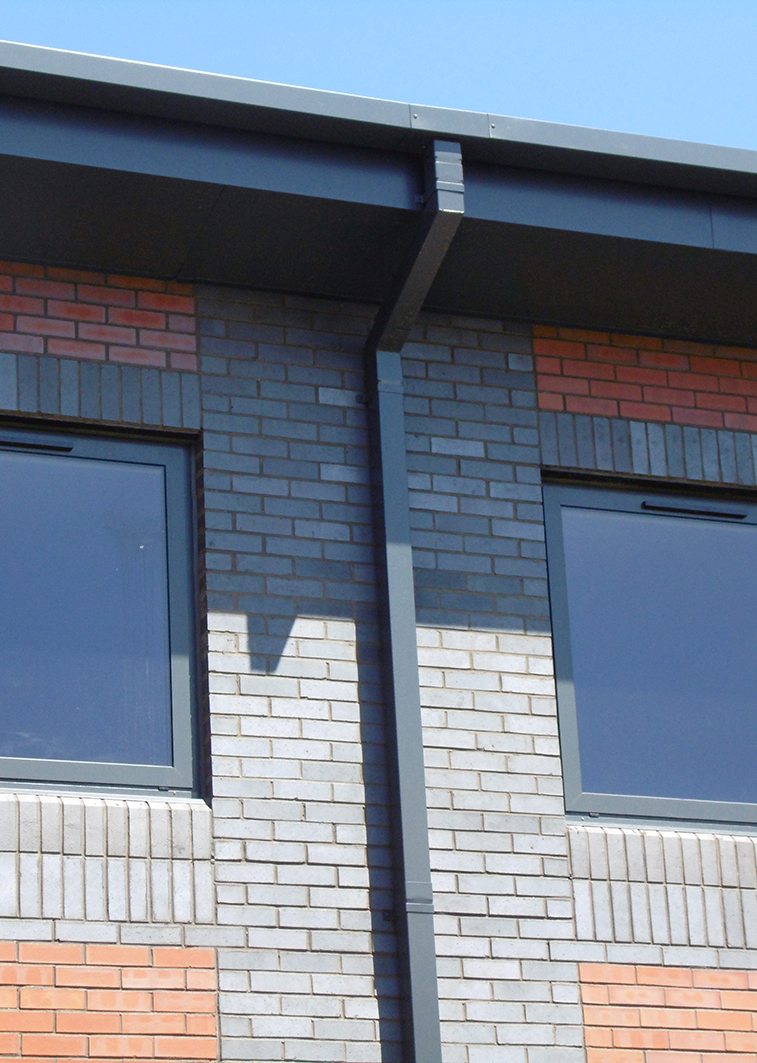
How Much Difference Does a Downpipe Make?
A surprisingly large difference. Increasing the downpipe diameter increases carrying capacity exponentially, not linearly.
For example:
Moving from 63mm > 76mm can increase capacity by 40%+
Moving from 76mm > 100mm can nearly double the flow capacity
This can be the difference between a gutter overflowing during a storm and a system that continues to perform without strain.
Beyond capacity, larger downpipes also:
- Reduce the risk of blockages
- Improve the lifespan of the guttering system
- Reduce overflow noise
- Enhance the resilience of the building envelope
Final Guidance for Choosing the Right Downpipe Size
To select the right downpipe:
- Calculate the effective roof area.
- Divide the area across realistic drainage zones.
- Match gutter and downpipe sizes carefully.
- Use larger pipes for steep roofs, long gutter runs, or areas with high rainfall.
- Choose round pipes if maximum flow performance is the priority.
- Install additional downpipes for complex or commercial roofs.
Most domestic homes will perform perfectly well with a 76mm downpipe, but properties with large roof areas, multiple storeys, or significant rainfall exposure should strongly consider 100mm options or additional outlets.
Looking for the Right Downpipe? Gutter Centre Has Every Option Covered
Whether you’re replacing a small domestic downpipe or planning the drainage layout for a commercial project, Gutter Centre provides complete solutions across all sizes, materials and profiles. Explore our range of round downpipes and square downpipes, compatible gutter systems, and high-capacity commercial drainage components, and ensure your project performs flawlessly in every storm.