


When roofline problems appear, most homeowners and even installers naturally focus on the most visible component first: the guttering. It’s the part that overflows, leaks, or begins to sag. It’s what you see struggling during heavy rainfall. And in many cases, it’s the only element that gets replaced.
But swapping out gutters alone is often a short-term fix for what is usually a broader roofline issue.
Your gutters, fascias, and soffits are designed to work as a complete, integrated system. For homeowners, that means better protection for your property. For trade professionals, it means delivering a more reliable, long-lasting solution for your customers. If one component has started to fail, it’s likely the others are already compromised or nearing failure.
A full roofline replacement, covering gutters, fascias, and soffits together, ensures effective water management, helps prevent damp and timber decay, improves the overall appearance of the property, and reduces the likelihood of repeat call-backs or ongoing maintenance costs.
Treating the roofline as a complete system rather than isolated parts makes better structural and financial sense for both the installer and the end user.
Your Roofline Works as One Integrated System
The roofline isn’t just decorative trim. It performs critical structural and protective functions.
- Gutters collect and channel rainwater away from the property.
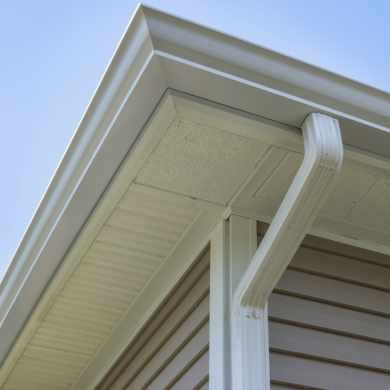
- Fascias are the vertical boards fixed to the ends of the rafters, supporting the bottom row of roof tiles and carrying the guttering.
- Soffits sit beneath the fascia boards, enclosing the roof overhang and providing ventilation to the loft space.
The ventilation level required in the soffits depends on the roof construction. In a cold roof (where insulation sits at ceiling level), ventilation at the eaves is essential to allow airflow and prevent condensation build-up.
In contrast, a warm roof (where insulation follows the roof slope) typically requires little to no soffit ventilation, as the thermal envelope is maintained at rafter level. Understanding this distinction is critical when specifying or upgrading soffit systems, as incorrect ventilation can lead to long-term moisture issues.
If you replace only the guttering but leave ageing fascias or soffits in place, you may be attaching new components to weakened or deteriorating structures.
For example:
- Old timber fascias may be partially rotten behind paintwork.
- Inadequate soffit ventilation can trap moisture in the roof space.
- Existing fixings may not securely support modern, higher-capacity gutter systems.
A full roofline replacement ensures every element performs to modern standards, structurally, functionally and visually.
Improved Water Management, Beyond Just New Gutters
Modern gutter systems are designed to handle higher rainfall volumes than older systems. But the effectiveness of any gutter depends on the supports it relies on.
When fascias are warped or weakened:
- Gutters may sit unevenly.
- Water may pool rather than flow to downpipes.
- Joints can separate under load.
- Brackets may pull away from the board.
A full roofline replacement allows:
- Correct fall and alignment across the entire run.
- Secure, structurally sound fixings.
- Proper integration between fascia and gutter brackets.
- The opportunity to upgrade to higher-capacity systems if required.
In areas exposed to heavy rainfall or storms, this system-wide upgrade significantly reduces overflow and water tracking down walls.
Better water management protects:
- External brickwork
- Rendered finishes
- Foundations
- Landscaping
- Basements and lower ground levels
It’s not just about stopping drips; it’s about protecting the whole building envelope.
Reduced Risk of Damp, Rot & Structural Damage
Roofline deterioration often begins out of sight.
Timber fascias can rot from the back inward due to:
- Persistent moisture
- Poor ventilation
- Leaking joints
- Capillary water absorption
Similarly, soffits without adequate ventilation can lead to condensation build-up in the loft, contributing to:
- Timber decay
- Mould growth
- Reduced insulation performance
- Corrosion of metal fixings
Replacing gutters alone does nothing to address these hidden issues.
A full roofline replacement offers the opportunity to:
- Remove and inspect the underlying rafter ends
- Replace any compromised timber
- Install ventilated soffit systems
- Upgrade to modern, low-maintenance materials
- Improve airflow within the roof structure
By tackling all components at once, you significantly reduce the risk of recurring damp problems and costly structural repairs later.
Enhanced Kerb Appeal & Consistent Aesthetics
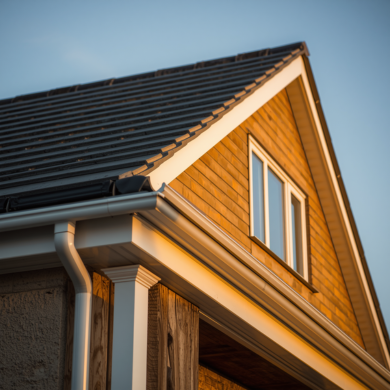
Your roofline frames the entire property. Even if the walls and windows are pristine, mismatched or ageing fascias and soffits can undermine the overall appearance.
Common aesthetic issues include:
Faded or peeling paint on timber boards
Discolouration from algae or pollution
Visible patch repair
Warped or uneven lines
Different colour tones between the new gutters and the old fascias
A full roofline replacement ensures visual consistency.
By installing gutters, fascias and soffits together, you can:
Achieve uniform colour and finish
Match or contrast with window frames
Complement brickwork or render
Create clean, sharp roof lines
Modernise the overall look of the property
For projects using modern materials, aluminium systems such as Skyline (an Alumasc brand) are often manufactured bespoke to suit the building. These systems are typically available in a wide range of standard colours (commonly 27) with additional non-standard finishes available on request, allowing for greater design flexibility and a more tailored architectural finish.
For homeowners considering selling, kerb appeal directly influences first impressions and perceived property condition. A fresh, coordinated roofline signals that the home has been well-maintained.
Long-Term Cost Savings, Avoiding Repeat Labour
One of the most overlooked benefits of a full roofline replacement is the financial efficiency it offers.
Replacing gutters alone may appear cheaper initially. However, if fascias or soffits fail within a few years, you’ll face:
- Additional scaffold costs
- Repeat labour charges
- Potential reinstallation of gutter sections
- Disruption twice instead of once
- Bundling the work into one project allows you to:
- Pay for access equipment once
- Minimise labour duplication
- Ensure compatibility between components
- Avoid partial removal and refitting later
Over a 10–20 year period, replacing the entire roofline at once is often more cost-effective than piecemeal upgrades. It also reduces the likelihood of “patchwork” maintenance, where one repair reveals another problem.
Modern Materials Mean Lower Maintenance
Many older rooflines use painted timber boards. While timber can perform well when maintained, it requires:
Regular repainting
Ongoing inspection
Prompt repair of cracks
Protection from prolonged moisture
Modern uPVC and aluminium roofline systems offer:
Long service life
Minimal maintenance
No repainting requirement
Resistance to rot and corrosion
Stable colour finishes
Upgrading the entire roofline together ensures consistent performance and longevity.
When only the gutters are replaced, but the timber fascias remain, homeowners often find themselves repainting boards or repairing rot, even though the gutters are brand new.
A full replacement eliminates that mismatch in lifespan between components.
Why Bundling Makes Practical Sense
If you're already considering gutter replacement, it’s worth asking:
How old are the fascias?
Are there signs of flaking paint or soft timber?
Is soffit ventilation adequate?
Have there been recurring damp issues?
Is scaffolding already required?
If access is needed, this is the ideal time to assess the entire roofline.
Bundling fascias, soffits and gutters into one project allows contractors to:
Strip back to the rafters
Address hidden defects
Install modern ventilation
Ensure correct fixing points
Deliver a clean, continuous finish
This proactive approach prevents reactive repairs later.
When Is a Full Roofline Replacement Recommended?
A complete roofline upgrade is particularly advisable if:
The property is over 20–25 years old.
Timber fascias show cracking, warping or softness.
You notice damp patches near the roof level internally.
Gutters frequently pull away from the house.
You are upgrading windows and want consistent external finishes.
You are planning a wider renovation or repainting project.
It is also common during:
Loft conversions
Re-roofing works
External insulation upgrades
Major refurbishments
Replacing the roofline alongside other high-level works maximises efficiency.
Consistent Performance Across the Whole System
Perhaps the most important reason not to replace gutters in isolation is the need for consistent performance. A roofline system is only as strong as its weakest component.
By replacing everything together, you ensure:
Structural integrity
Proper alignment
Adequate ventilation
Long-term weather resistance
Reduced maintenance burden
It transforms the roof edge from a patchwork of old and new materials into a cohesive protective system.
Think System, Not Component
It’s understandable to focus on the part that looks faulty, usually the gutter. But in most cases, visible gutter problems are symptoms, not root causes.
Fascias and soffits play an equally important role in protecting your property from water damage, damp and structural decay. Replacing the entire roofline ensures every component works together structurally, visually, and functionally.
If your gutters are reaching the end of their lifespan, it’s worth stepping back and assessing the entire system. Investing once in a complete roofline replacement can deliver better performance, stronger protection and greater peace of mind for years to come.
If you'd like guidance on selecting compatible gutters, fascias and soffits for your property, or advice on bundling your roofline upgrade efficiently, contact the team at Gutter Centre and let our expert team assess your options and choose a system built for long-term performance.
