


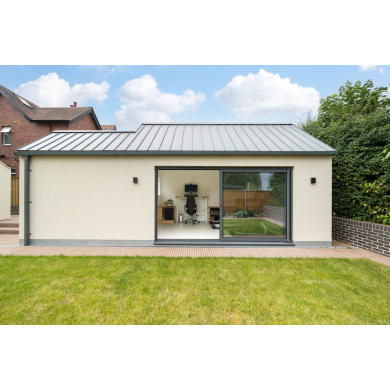
Aluminium guttering offers a durable, versatile solution for managing rainwater on everything from modern homes to large commercial buildings and heritage properties. With a choice of profiles, finishes and system designs, it combines practical drainage performance with the flexibility to complement different architectural styles.
But choosing the right aluminium guttering involves more than selecting a colour or shape. Gutter capacity, roof size, manufacturing method and long-term maintenance all influence how well a system performs.
In this guide, we explore the different types of aluminium guttering, what it costs, how it compares with uPVC, steel and cast iron, how to choose the right system for your building, what to consider during installation and how to maintain it for long-term performance.
Key takeaways
- Aluminium guttering typically lasts 30–50 years, compared with around 20–25 years for uPVC.
- It is far lighter than cast iron and does not rust, making it a popular low-maintenance alternative for period and modern properties.
- It is available as sectional (pressed), cast and seamless systems, in half-round, ogee, box and deepflow profiles.
- Factory powder coating gives a durable finish in a wide range of colours.
- It costs more than uPVC to buy but less than cast iron, and usually works out cheaper over its lifetime than uPVC because it needs replacing less often.
- Gutter size should be based on roof area and rainfall, not guesswork, undersizing is the most common cause of overflowing gutters.
What’s in an aluminium guttering system?
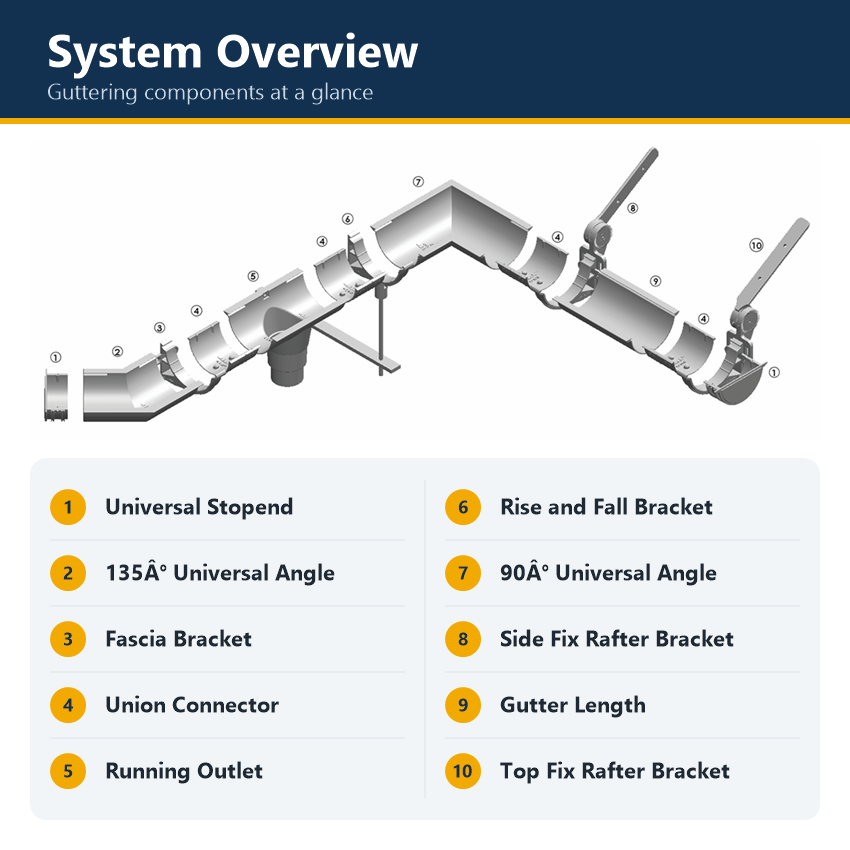
A typical aluminium guttering system includes several components:
- Gutters: Channels that collect rainwater along the roofline.
- Gutter brackets: Fixings that support the gutter and maintain the required alignment and fall.
- Gutter outlets: Connections that direct water from the gutter into downpipes.
- Stop ends: Components that close the ends of gutter runs.
- Unions and joints: Connectors that join gutter sections while accommodating the system's design requirements.
- Downpipes: Vertical pipes that carry rainwater towards the drainage system.
The precise components required depend on the gutter profile, roof layout and chosen system.
Why Choose Aluminium Guttering?
Aluminium guttering is widely used because it offers a combination of durability, design flexibility and relatively low weight. It suits both new-build projects and renovations, provided the system is correctly specified for the building.
Durability and corrosion resistance
Aluminium does not rust. It naturally forms a thin oxide layer that protects its surface from corrosion, and factory-applied coatings add a further layer of protection.
As with any metal rainwater system, exposure to coastal conditions, pollutants and incompatible materials should be considered when selecting the product.
Long service life
A well-specified aluminium guttering system typically lasts 30–50 years. Its lifespan depends on the product, finish, environmental exposure, installation quality and ongoing maintenance.
Lightweight construction
Aluminium is roughly a third of the weight of steel and far lighter than cast iron. This makes handling and installation easier, particularly on larger projects, although safe access, suitable fixings and appropriate support remain essential.
A choice of profiles and finishes
Aluminium guttering is available in different shapes, sizes and colours. Half-round and ogee profiles suit traditional architecture, while box gutters and other larger-capacity designs suit contemporary or commercial buildings.
Powder-coated finishes provide additional surface protection and allow the guttering to complement the building's exterior.
Recyclable
Aluminium can be recycled repeatedly without losing its properties, which makes it a more sustainable choice than plastic guttering.
Suitable for different building types
From domestic extensions to warehouses, offices and heritage renovations, aluminium guttering can be specified for a wide range of applications. The key is selecting a system with the correct capacity, profile, finish and installation details for the project.
Types of Aluminium Guttering
Aluminium guttering differs according to how it is manufactured, the profile used and the way individual sections are joined together. Understanding these differences helps you identify a suitable system for your building.
Pressed aluminium guttering
Pressed aluminium guttering is manufactured by forming aluminium sheet into the required profile using specialist tooling. Products are commonly supplied in sections that are connected during installation.
Sectional systems are practical for projects where standard lengths, established profiles and compatible accessories are required. The number and design of joints will depend on the system and layout.
Cast aluminium guttering
Cast aluminium guttering is produced by pouring molten aluminium into moulds to create the required shape. This manufacturing method is often associated with traditional gutter profiles and architectural detailing.
Cast systems are particularly suitable for period properties and projects where the appearance of the rainwater goods is important, and are often used as a lighter, lower-maintenance replacement for cast iron. Individual product specifications should be checked for dimensions, finish options, component availability and installation requirements.
Seamless aluminium guttering
Seamless (or continuous) aluminium guttering is roll-formed on site from a coil of aluminium, so each run is made to the exact length needed with no joints along it. Fewer joints means fewer potential leak points and a clean, uninterrupted look. The trade-off is that it needs a specialist installer with a forming machine, and a damaged section can’t simply be swapped out like a sectional length.
Aluminium gutter profiles explained
The gutter profile affects both the appearance of the system and its potential drainage capacity. Common profiles include:
- Half-round guttering: A curved, semicircular profile that suits a wide range of domestic and traditional buildings.
- Ogee guttering: A decorative profile with a shaped front edge, often chosen for its architectural appearance.
- Box guttering: A rectangular or square-shaped channel that can be suitable for contemporary buildings and roof layouts requiring a different gutter configuration.
- Deepflow guttering: A deeper profile designed to provide additional water-carrying capacity within a particular system.
Profile names alone do not determine how much water a gutter can handle. Dimensions, gradient, outlet design and the manufacturer's performance data must all be considered.
What sizes does aluminium guttering come in?
Half-round aluminium guttering typically ranges from around 100mm for small roofs, porches and extensions to 125mm–150mm for larger homes and commercial roofs. Box and deepflow profiles are available in larger sizes for high-capacity applications. As a rough guide, most standard houses need 100mm–125mm guttering, but always check the size against your roof area (see the sizing section below).
How Much Does Aluminium Guttering Cost?
Aluminium guttering costs more than uPVC to buy but considerably less than cast iron. As a guide, supply-only prices for standard half-round aluminium gutter start from around £19 per metre, with ogee, box and cast profiles costing more.
The main factors that affect cost are:
- Profile and size: larger and decorative profiles cost more.
- Manufacturing method: cast aluminium is usually more expensive than pressed.
- Finish: special colours may cost more than standard colours.
- Number of fittings: corners, outlets and downpipes add up on complex rooflines.
- Installation: access, scaffolding and removal of the old system.
Because aluminium typically lasts twice as long as uPVC, the cost over the life of the building is often lower.
Aluminium Guttering vs Other Materials
Aluminium is not the only material used for rainwater systems. uPVC, steel and cast iron are also established options, each with different performance characteristics, maintenance requirements and aesthetic qualities.
| Feature | uPVC | Aluminium | Steel | Cast Iron |
| Weight | Very light | Relatively lightweight | Varies by specification | Generally heavy |
| Typical lifespan | 20-25 years | 30-50 years | Product and environment dependent | Can be very long with appropriate specification and maintenance |
| Corrosion resistance | Doesn't corrode but can become brittle and fade with UV | Doesn't rust, naturally forms a protective oxide layer, coatings add protection | Depends on steel grade and protective coating | Can corrode if protective coatings are damaged or neglected |
| Appearance | Functional, limited colours | Traditional and contemporary profiles | Traditional and modern profiles | Particularly suited to traditional architecture |
| Maintenance | Periodic cleaning, joints may need resealing | Periodic cleaning and inspection | Coating and corrosion checks may be needed | Protective coating maintenance is important |
| Installation | Easiest to fit | Often easier to handle than heavier alternatives, with snap-fix options on some systems | Depends on the system and section size | Typically requires more handling and support |
| Cost | Lowest | Mid-range | Mid-range | Highest |
Aluminium vs uPVC guttering
uPVC is the cheapest and most common guttering in the UK, and it’s easy to fit. However, it expands and contracts more than aluminium, can become brittle and fade with UV exposure, and typically lasts around 20–25 years. Aluminium costs more upfront, but it is stronger, more rigid, holds its colour better and typically lasts 30–50 years. For homeowners planning to stay long term, or for properties where appearance matters, aluminium is usually the better investment.
Aluminium vs steel guttering
Steel guttering offers strength, durability and a clean appearance in both traditional and modern profiles. Quality coated steel systems are built to resist corrosion, although scratches, damaged edges and exposure to corrosive environments can affect long-term performance if the coating is not maintained.
Aluminium naturally develops an oxide layer that helps protect the underlying metal. It is also lighter, which can simplify handling. However, aluminium still requires appropriate detailing, maintenance and protection against incompatible materials or aggressive environments.
Both are excellent long-life metal systems. Compare the specific products' warranties, coating specifications and maintenance recommendations before deciding which is most suitable.
Aluminium vs cast iron guttering
Cast iron guttering is often chosen for Victorian, Edwardian and other traditional properties because of its distinctive appearance and substantial construction. It can provide a very long service life when properly specified and maintained, but its weight can make installation more demanding.
Aluminium offers a lighter alternative and can reproduce traditional profiles, including ogee and moulded designs. It may therefore be suitable where a traditional appearance is wanted alongside the practical advantages of a lighter material.
The choice is not simply about which material lasts longest. Authenticity, the building's requirements, maintenance, installation costs and any heritage restrictions should all be considered.
How to Choose the Right Gutter Size and Calculate Capacity
Gutter sizing is an important part of rainwater system design. An undersized or poorly configured gutter can overflow during heavy rainfall, potentially contributing to water ingress, staining, damage to external finishes or problems around the building's foundations.
From experience, the most common problem we see is guttering that’s too small for the roof, or long runs with too few outlets. Adding an extra outlet is often cheaper than upsizing the whole system.
A suitable design considers both the volume of rainwater reaching the gutter and how efficiently the system can discharge it.
What affects gutter capacity?
The principal factors include:
- Effective roof catchment area: The roof area contributing runoff to a particular gutter section.
- Rainfall intensity: The design rainfall rate used for the location and application.
- Roof geometry: Roof pitch, shape and the way water is distributed across the gutter.
- Gutter profile and dimensions: The channel's shape and size affect its hydraulic performance.
- Gutter gradient: The fall along the gutter influences water movement.
- Outlet size and position: The number, diameter and location of outlets affect discharge.
- Downpipe configuration: Downpipes must be appropriate for the flow they receive.
How is gutter capacity calculated?
A simplified estimate of roof runoff can be calculated using the effective catchment area and design rainfall intensity:
Q = (A × r) ÷ 3600
Where:
Q = estimated runoff in litres per second.
A = effective roof catchment area in square metres.
r = design rainfall intensity in millimetres per hour.
For example, a roof catchment area of 100 m² receiving a design rainfall intensity of 75 mm per hour would produce an estimated runoff of:
Q = (100 × 75) ÷ 3600 = 2.08 litres per second
This is an illustrative runoff calculation, not a recommendation for a particular gutter size. The appropriate design rainfall, effective catchment area and system capacity must be established for the project. Gutter and outlet performance should then be checked against the relevant design guidance and manufacturer's data.
For UK projects, BS EN 12056-3 is a relevant standard for the design and calculation of roof drainage systems. Building drainage requirements should also be considered where applicable.
Not sure what size you need? Send us your roof measurements and our team will recommend a system.
Aluminium Gutter Bracket Spacing
Bracket spacing is an important consideration because the guttering must remain adequately supported under its own weight and the loads it may experience during service.
Spacing requirements vary according to the gutter profile, material thickness, bracket design, supporting structure and manufacturer's specification. Corners, outlets, joints and other points of concentrated load may require particular attention.
When planning bracket positions:
Follow the manufacturer's specified maximum centres.
Confirm that the fascia, rafters or alternative supporting structure can take the required loads.
Position brackets appropriately around joints, outlets and changes of direction.
Use compatible fixings suitable for the substrate and environment.
Allow for thermal movement where the system requires it.
Do not rely on a generic spacing measurement without checking the product's installation instructions. The correct approach is to use the technical guidance for the specific guttering system being installed.
Aluminium Gutter Expansion and Jointing
Temperature changes cause aluminium to expand and contract. This movement needs to be considered when designing and installing gutter runs, particularly where long continuous lengths are involved.
The amount of movement depends on the length of the gutter and the temperature change it experiences. The jointing arrangement must therefore be appropriate for the product and installation conditions.
Why are expansion provisions important?
If thermal movement is not accommodated, stresses can develop around joints, fixings and connection points. Over time, these stresses may contribute to leaks, distortion or damage.
Depending on the system, movement may be managed through purpose-designed expansion joints, sliding connections or other manufacturer-specified details.
How Long Does Aluminium Guttering Last?
Aluminium guttering typically lasts 30–50 years, and well-maintained cast and seamless systems can last longer. How long yours lasts depends on the quality of the product and finish, how well it was installed, how exposed the building is (coastal and industrial sites are harsher) and how well it is maintained.
How to Maintain Aluminium Guttering
Aluminium guttering is low maintenance, but not no maintenance. A few simple checks will keep it working and looking good for decades:
Clear leaves and debris at least once a year, ideally in late autumn, and twice a year if the building is near trees.
Check outlets and downpipes are free-flowing, as blockages here are the most common cause of overflows.
Inspect joints and unions for leaks, and reseal if needed with a sealant recommended by the manufacturer.
Check brackets are secure and the gutter still has its fall.
Wash powder-coated surfaces with mild soapy water and a soft brush. Avoid abrasive cleaners and pressure washers at close range.
Avoid contact with copper or run-off from copper and untreated lead, which can cause corrosion.
Gutter guards can reduce how often you need to clear the gutters on buildings surrounded by trees.
Powder-Coated Aluminium Guttering Explained
Powder coating is a finishing process in which a dry coating material is applied to a prepared surface and cured to create a protective and decorative finish.
For aluminium guttering, factory-applied powder coating provides colour consistency and additional protection, while allowing the rainwater system to complement the building's exterior. Finishes are commonly available in a wide range of RAL colours, with black, white, grey and anthracite among the most popular.
The benefits of powder coating
Colour choice: A range of finishes can be available, depending on the product.
Consistent appearance: Factory application allows the coating process to be controlled.
Surface protection: An appropriate coating system can help protect the aluminium from environmental exposure.
Architectural flexibility: Gutters can be coordinated with other building components.
The performance of a powder-coated gutter depends on the coating specification, preparation, application quality and environment. A coated product should still be cleaned and inspected in accordance with the manufacturer's instructions.
What standards should you look for?
BS EN 12206-1 is a relevant standard for organic coatings on aluminium and aluminium alloys used in architectural applications. Alumasc identifies this standard in its published technical literature and documents BBA certification for its specified powder-coating system.
However, the existence of a standard or certification does not mean every powder-coated gutter automatically meets it. Check the actual product documentation, including any applicable certification scope and warranty terms.
Aluminium Guttering: Standards, Certifications and Warranty
When specifying aluminium guttering, technical documentation can help establish whether a product is suitable for its intended application. This is particularly important for commercial developments, larger projects and buildings with specific architectural or performance requirements.
Which certifications and standards are relevant?
The documentation available varies by manufacturer and product range. Relevant information may include:
British Board of Agrément (BBA) certification: Independent assessment of specified construction products and systems. Check the certificate's scope, conditions and current validity.
BS EN 12206-1: A standard relevant to organic coatings on aluminium and aluminium alloys for architectural purposes.
BS EN 12056-3: A relevant standard for gravity drainage systems inside buildings, including roof drainage design and calculation.
Quality management certification: For example, ISO 9001. Check whether the manufacturer holds it for the site where the product is made.
What warranty should you expect?
Warranties vary by manufacturer and finish, and often cover the product and the powder coating separately. Coating guarantees are usually conditional on correct installation, an appropriate environment (coastal sites may have shorter terms) and regular cleaning. Always ask for the warranty terms in writing before you buy.
Frequently Asked Questions
How long does aluminium guttering last?
Typically 30–50 years, depending on the product, finish, installation and maintenance.
Is aluminium guttering better than uPVC?
Aluminium is stronger, longer lasting and holds its colour better than uPVC, but it costs more upfront. For a long-term, low-maintenance system, aluminium is usually the better choice.
Does aluminium guttering rust?
No. Aluminium does not rust. It forms a natural oxide layer that protects it, and a powder-coated finish adds further protection.
Can you paint aluminium guttering?
Yes, with the right preparation (clean, degrease and use a suitable primer for aluminium). However, a factory powder-coated finish is far more durable than paint applied on site.
What size aluminium guttering do I need?
Most standard houses need 100mm–125mm guttering, but the right size depends on your roof area, roof pitch and number of outlets. Our team can work it out for you.
Is aluminium guttering suitable for listed buildings?
Cast aluminium in traditional profiles is often accepted as a replacement for cast iron, but listed buildings and conservation areas may require consent. Check with your local conservation officer before replacing original rainwater goods.
Can I fit aluminium guttering myself?
Sectional aluminium systems can be fitted by a competent DIYer, as they are lightweight and come with compatible fittings. Always work safely at height and follow the manufacturer’s instructions. Seamless systems need a specialist installer.
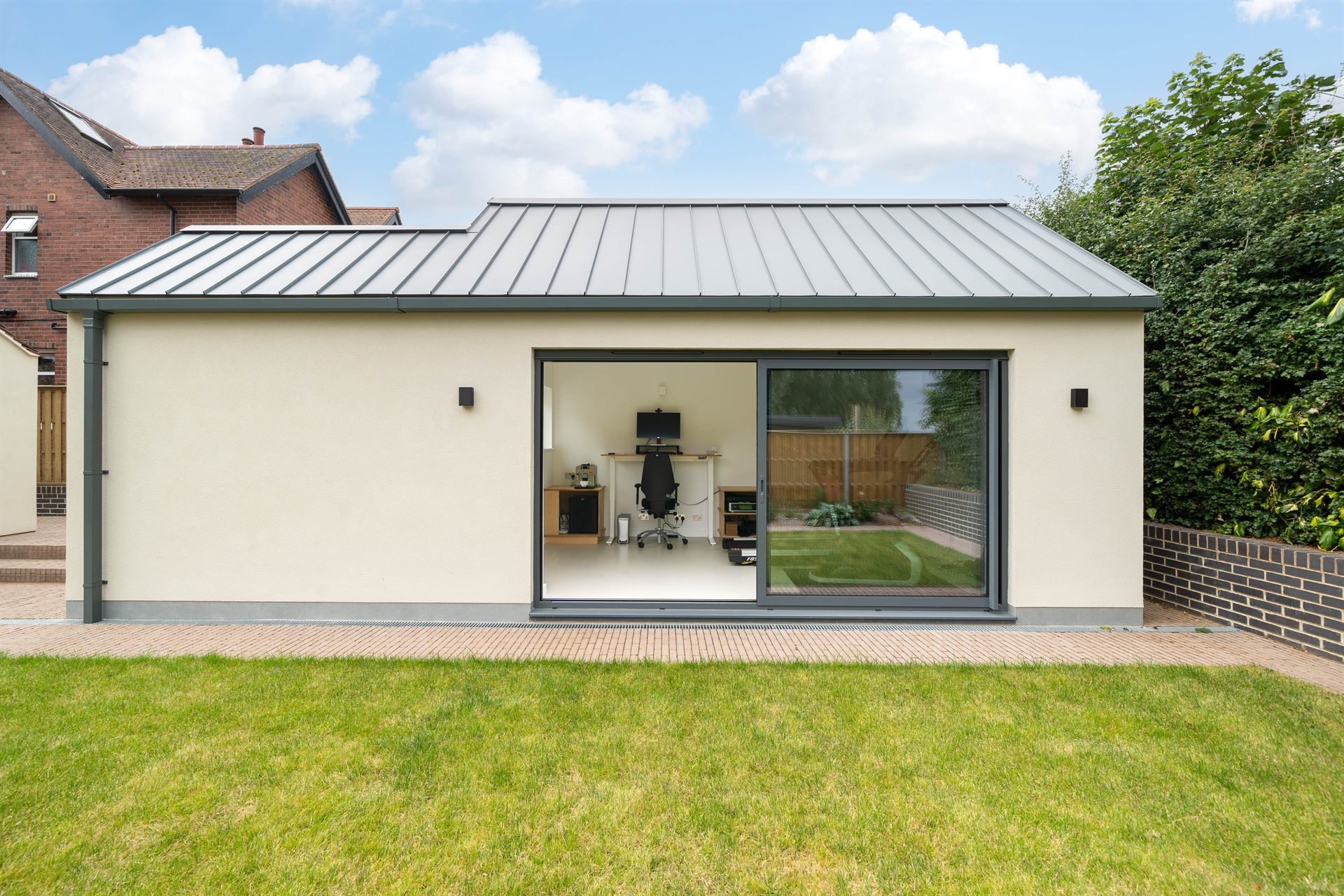
Find the Right Aluminium Guttering for Your Project
Choosing aluminium guttering involves more than selecting a profile or finish. The right system needs to complement the building, accommodate the roof's drainage requirements and meet the practical demands of installation and ongoing maintenance.
Whether you're upgrading a domestic roofline, specifying rainwater goods for a commercial development or restoring a traditional property, compare the available profiles, technical specifications, finishes and warranty terms before making a decision.
At The Gutter Centre, we’ve supplied rainwater systems across the UK for many years, stocking leading aluminium brands including Alutec and Alumasc. Explore our range of aluminium guttering systems to find a suitable solution for your project. For more complex requirements, get in touch with our expert team for specialist advice and guidance.
Related Blog Articles To Explore:
Alutec Aluminium Guttering: Complete Guide to Systems, Profiles & Applications
Low-Maintenance Gutter Options: The Systems You Can Fit and Forget
The Complete Guide to Gutter Profiles: Half Round, Box, Ogee & More
